


Patch 2.9.9 – Horus Could Break the Burst Meta

Infinity Kingdom’s v2.9.9 update contains a long list of quality-of-life improvements, but its real strategic importance is concentrated in three changes: the arrival of Horus, the release of Psychic Vortex, and the decision to make several important Wish Shop skills available earlier in seasonal progression.
The smaller improvements are welcome. Automatic building upgrades will help developing accounts, Lord Talent trees will become easier to adjust, and formation copying should make Elemental Domain less tedious. None of those changes, however, are likely to reshape the strongest marches in the game. Horus might.
Horus is a new back-row Chaos magic Immortal whose passive limits the damage he can receive from any single instance. That mechanic directly challenges the high-burst approach that has defined a large part of the Infinity Kingdom meta in recent years. When combined with Psychic Vortex and an energy-regeneration build, he has the potential to become an extremely difficult carry to burst down while steadily scaling into overwhelming magical damage.
At the same time, Eternal Battlelust is moving from Legendary Season to Conquest. This removes one of the main reasons Medusa previously had to wait until Legendary before reaching her full potential. The result could be a major shift in both Conquest progression and the top Legendary meta, with Medusa becoming the leading physical carry earlier and Horus emerging as a genuine magical alternative at the highest level.
Table of Contents
- Horus and Royal Sarcophagus
- Why the damage cap matters
- Psychic Vortex and the new hyper-regen mage
- Horus versus Medusa at the top of the meta
- The Wish Shop changes
- Thorn Armor and Counterattack teams
- Other additions and quality-of-life improvements
- Final assessment
Horus and Royal Sarcophagus
Horus is a Chaos Immortal positioned in the back row. He deals magical damage, commands Bowmen, and will initially be obtainable through the Pirate Festival event. His ability, Royal Sarcophagus, combines a permanent defensive passive with an active area attack and team-wide damage amplification.

His exclusive artifact increases the Punishment application chance to 100%, while the official recommendations for its primary attribute are Crit Rate or Magical Attack Bonus. With the artifact equipped, every successful ultimate should therefore place the full enemy march under a 15% damage-taken debuff for six seconds at maximum skill level.
There is already plenty to like in the active portion of the ability. A 400% magical attack against all four enemies is strong, and Punishment increases the damage those targets receive from the rest of Horus’s march as well. He is not merely a protected damage dealer. He can also function as a team-wide amplifier, making every follow-up ultimate and triggered magical attack more threatening during the debuff window.
The passive portion, however, is what makes Horus genuinely unusual.
Why the Damage Cap Matters
At maximum level, no individual instance of damage can remove more than 5% of Horus’s maximum HP. In a simplified battle with no healing, shields or other HP effects, an enemy would need at least 20 separate damaging instances to defeat him from full health. One enormous critical hit cannot simply erase him.
That is a direct answer to burst-based marches. Much of the recent high-end meta has revolved around generating energy quickly, stacking damage multipliers and delivering an overwhelming ultimate before the opposing team’s sustain can take control. Horus places a hard limit on the value of each individual hit against him. A skill that would normally remove half of a back-row Immortal’s health is reduced to the same 5% ceiling as any other sufficiently large hit.
This does not make Horus immortal, and it is important not to read the ability as complete damage immunity. Rapid normal attacks, multi-hit skills, damage-over-time effects and frequent passive triggers may still create enough separate instances to bring him down. The passive also says nothing about control, energy reduction, silence or the death of the three Immortals around him. A Horus left alive after the rest of his march collapses has not necessarily won the battle.
What the cap does is buy time. Healing, shields and other forms of sustain are much more valuable when the carry cannot be deleted between two healing cycles. This is why Horus looks especially well suited to a hyper-regeneration mage team. Conventional burst may struggle to finish him, while every additional second gives Horus more opportunities to gain energy, cast Royal Sarcophagus and strengthen his subsequent magical damage.
There are several mechanical details that will need to be tested after release. We need to see exactly how the cap treats multi-hit abilities, damage-over-time ticks, reflected damage and other unusual damage sources. We also need to confirm whether Punishment is applied before or after Royal Sarcophagus deals its damage. The wording strongly establishes Horus as an anti-burst Immortal, but those interactions will determine which teams can counter him most efficiently.
Psychic Vortex and the New Hyper-Regen Mage
Psychic Vortex is the new Tower of Knowledge skill arriving with Horus. It becomes available from the Wish Shop during Legendary Season and gains a stack whenever the equipped Immortal loses 10% HP or casts an Ultimate Skill.

A maximum increase of 150% Magical Damage is enormous. Horus is particularly interesting as its carrier because his passive gives him time to build the stacks without being removed by a single burst sequence. His ultimate contributes a stack, incoming HP loss can contribute additional stacks, and the finished effect strengthens both Royal Sarcophagus and any magical damage produced by his equipped skills.
The most obvious high-end setup to test is:
- Energy Mastery, to accelerate Horus’s Ultimate Skill cycle.
- Infinite Firepower, to add repeated area damage and a further energy-regeneration increase.
- Psychic Vortex, to scale Horus’s total magical output as the battle develops.
Infinite Firepower is already one of the foundations of the premium hyper-regeneration mage build. It has a 60% chance to activate every three seconds, deals 350% magical damage to all enemies and temporarily raises Energy Regeneration Speed by 20%. Energy Mastery then pushes the ultimate cycle even harder. Psychic Vortex adds a different type of pressure because its modifier is not limited to Horus’s ultimate. Once stacked, it should strengthen his active damage and the magical damage from Infinite Firepower, although the final calculation will depend on how its bonus combines with other modifiers.
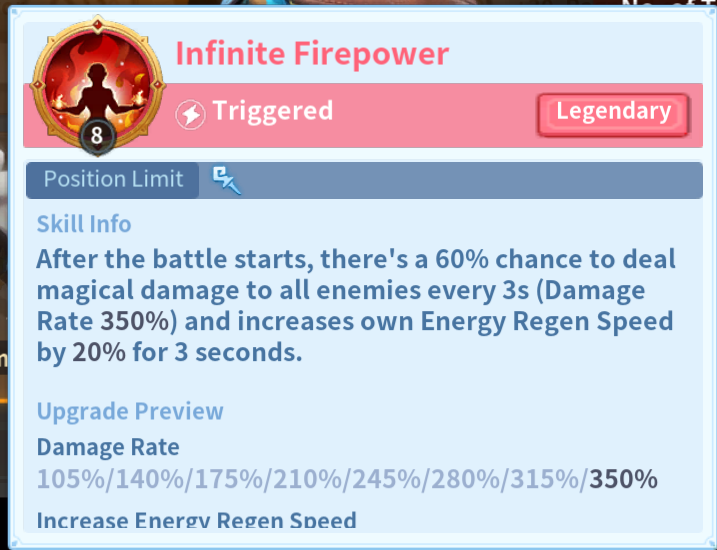
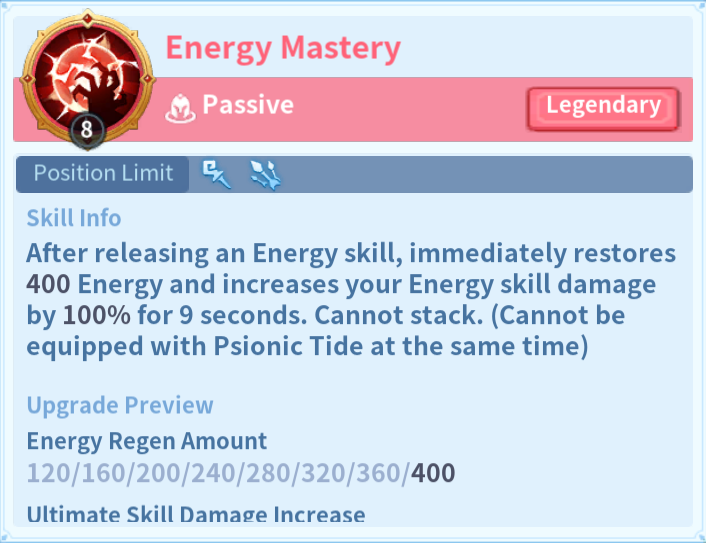
Existing hyper-regen builds commonly use Corrosive Power beside Infinite Firepower and Energy Mastery. On Horus, Psychic Vortex may be the stronger alternative because it scales his broader damage package and is designed around repeated ultimate casts and survivable HP loss. That comparison cannot be settled from the tooltip alone, but it is one of the first skill tests veteran players should run.
The synergy extends beyond Horus’s personal numbers. Royal Sarcophagus places Punishment on the opposing march, increasing all damage received, while Psychic Vortex raises Horus’s own Magical Damage. If the team can maintain its energy engine, Horus is simultaneously making himself stronger and making the enemy more vulnerable. That creates the outline of a mage carry who is extremely difficult to burst, yet becomes more dangerous the longer he remains in combat.
There is one important unknown in the Psychic Vortex wording. “When your HP decreases by 10%” could refer to cumulative 10% thresholds, or it could require a particular damage event or internal trigger. Horus’s damage cap makes that distinction especially relevant. If cumulative HP loss reliably triggers the skill, he should build stacks naturally. If the game expects a single 10% loss, his passive could interact with the condition differently. Live testing is required before treating the stacking speed as settled.
Horus Versus Medusa at the Top of the Meta
Medusa is currently the standard against which new Chaos carries need to be measured. Her passive damage, control and exceptional interaction with Eternal Battlelust have made her the leading physical option at the top end of the game. Apollo and Loki remain strong secondary carries, but neither currently offers the same complete package as a fully developed Medusa team.
Horus does not look like a straightforward replacement for Medusa. He opens a separate magical route with a very different defensive profile. Medusa uses frequent passive damage to build an enormous physical advantage through Eternal Battlelust. Horus attempts to survive the opening burst, amplify the damage taken by the whole enemy march and scale a repeated magical attack cycle through Psychic Vortex.
For Legendary players, it may be entirely valid to build both. A Medusa march and a Horus march use different damage types, attack the opponent through different mechanics and are likely to demand different answers. If Horus performs as strongly in live combat as his tooltip suggests, conventional burst teams may have to rely more heavily on sustained multi-hit damage, energy control or a comparable Horus setup rather than expecting one ultimate rotation to decide the fight.
It is still too early to declare which carry will sit at the absolute top. The most important variables are Horus’s native Energy Regeneration, his final attributes and how the damage cap behaves against the strongest multi-hit and triggered skills. Psychic Vortex’s stacking behavior will matter just as much. If Horus has strong attributes and reaches his ultimate quickly, the combination of survival, 400% area damage and a reliable 15% Punishment debuff could make the proposed Energy Mastery, Infinite Firepower and Psychic Vortex build exceptional. If his energy cycle is slow or his base attributes fall behind Medusa, Apollo and Loki, the defensive passive may not be enough to make him the best overall carry.
My expectation is therefore not that Medusa disappears. At the highest level, the more likely outcome is a split carry meta in which Medusa remains the premier physical choice while Horus establishes a top-tier magical march. The question is less likely to be “Which one is playable?” and more likely to be “Which one deserves the strongest supporting cast, and which enemy march are you trying to counter?”
The Wish Shop Changes
The skill-release changes may appear smaller than a new Chaos Immortal, but they will alter account planning across several seasons.
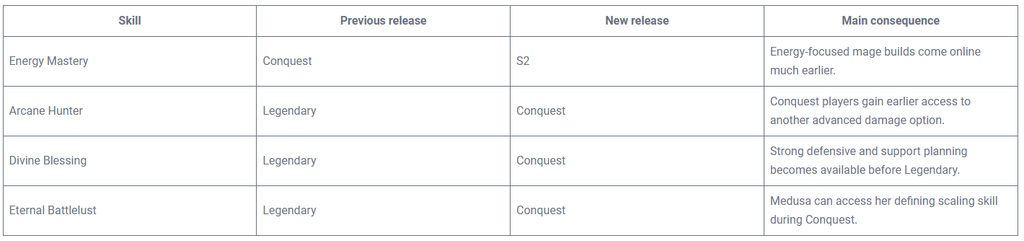
Eternal Battlelust is the most important change in this group. The skill gains a stack from passive or triggered damage, with each stack adding 5% Physical Damage and 1% damage reduction. At 20 stacks, that reaches 100% additional Physical Damage and 20% damage reduction. Medusa is an ideal user because her kit and common supporting skills can generate the repeated damage instances needed to build it rapidly.
Previously, this created a clear seasonal distinction. Medusa could be good during Conquest, but Eternal Battlelust was one of the pieces that made her frightening in Legendary. Apollo was therefore often the more immediately complete carry for a player entering Conquest. Moving Eternal Battlelust forward removes that waiting period. Players who can obtain and develop both Medusa and the skill should now be able to assemble her defining build during Conquest, which is likely to move her ahead of Apollo as the premium carry target for that stage of the game.
This is not just a balance change. It changes how players should save Wisdom Elixir, plan Wish Shop purchases and choose which Chaos Immortal to develop. Older progression advice that treats Legendary as the point at which Medusa overtakes Apollo will need to be reconsidered after v2.9.9.
Energy Mastery moving all the way to S2 is also significant. Newer mage accounts will gain access to one of the game’s core energy tools far earlier than before. It will not give an S2 player a finished Legendary hyper-regen build, but it makes early magical teams smoother and reduces the number of seasons players must wait before experimenting with faster ultimate cycles.
Thorn Armor and Counterattack Teams
Thorn Armor is the only Tower of Knowledge skill receiving a direct balance adjustment in this patch. Its general Physical Damage reduction remains at 6% plus 2% per additional level, but the reflected damage granted to targets with Counterattack effects rises from 6% plus 2% per level to 9% plus 3% per level.
At maximum level, the reflection therefore increases from 20% to 30% of the incoming damage. The reflected damage is calculated before reduction, which makes the improvement more meaningful than the percentage alone may suggest. Counterattack teams now have a stronger way to punish physical attackers, particularly Immortals that depend on frequent normal attacks.
This remains a specialized buff because the extra reflection only applies when the target already has a Counterattack effect. It will not transform Thorn Armor into a universal defensive skill, but established Counterattack marches should revisit it rather than relying on evaluations made before the patch.
Other Additions and Quality-of-Life Improvements
Most of the remaining changes will not determine the top meta, but several will make the game noticeably easier to manage.
- Alliance Charter: New players who unlock Alliances receive a five-day quest with rare item rewards. This should give beginners more direction while encouraging early participation in alliance activities.
- Immortal demonstration battles: The Immortal interface can now show suggested lineups and skill setups in demonstration battles. This is useful as an introduction, although official recommendations should be treated as a starting point rather than a substitute for testing and adapting to the current meta.
- Artifact source display: Newly obtained artifacts will show where they came from. The feature only supports artifacts acquired after v2.9.9.
- Immortal Affinity: Multiple Affinity rewards can be claimed together, with clearer prompts and notifications for newly available stories.
- Opening event rewards: Stellar Compass receives broader Artifact Schematic rewards, while the S0 and S1 Ancient Gold Exchange adds Artifact Empowerment materials.
- Automatic building upgrades: Accounts with Castle Level 3 or higher can instantly raise eligible buildings by multiple levels when all requirements are met. It applies when at least two levels are available and the building is level 48 or below, making it primarily a catch-up feature.
- Lord Talents: Players can downgrade talents and reset a single Talent tree. This should make experimentation and switching between development and combat setups less wasteful.
- Elemental Domain: Existing formations can be copied quickly, reducing repetitive team setup.
- Alliance Spar: The Castle requirement changes to level 5 or higher.
- Alchemy Lab: Clicking selected equipment during decomposition now deselects it, removing a small but irritating interface problem.
Final Assessment
Patch 2.9.9 may prove to be an important turning point in Infinity Kingdom’s carry meta. Horus appears to be designed as an answer to the burst arms race, and Royal Sarcophagus gives him a form of protection that no ordinary defensive stat can replicate. A maximum 5% damage cap per instance does not make him untouchable, but it should prevent the huge single hits on which many top teams rely from deciding the battle immediately.
Psychic Vortex looks like the natural offensive partner for that design. Horus survives long enough to accumulate its stacks, repeated ultimates help activate it, and Punishment magnifies the pressure created by the entire team. Energy Mastery, Infinite Firepower and Psychic Vortex could produce a new version of the hyper-regeneration mage build, this time centered on a carry who cannot be removed by conventional burst before the engine begins to run.
Meanwhile, Eternal Battlelust arriving in Conquest accelerates Medusa’s rise and weakens the old argument for prioritizing Apollo during that stage. Medusa should now be able to access the skill that completes her scaling build a full seasonal tier earlier. Rather than creating one obvious winner, v2.9.9 may leave high-end players choosing between the established physical dominance of Medusa and the anti-burst magical potential of Horus, or building both for different marches.
The exact ranking should wait for live tests of Horus’s attributes, energy cycle, damage-cap interactions and Psychic Vortex triggers. On paper, though, this is much more than a routine content patch. It introduces a credible counter to burst damage, moves a top Medusa skill into Conquest and gives veteran mage players an entirely new endgame build to explore.
Published: 04-09-2026
-

Chapter 6 – Under the Gilded Floor
Infinity Kingdom’s official Lore Series continues with Chapter 6, Under the Gilded Floor. After the enormous revelations surrounding Valhalla, the Sanctuary and the creation of a false god, this chapter brings the story back to Brynhild and the Hangover Knight as they follow the conspiracy into a hidden alchemical laboratory. It is a short chapter,…
-
Patch 3.0.0 – Jadwiga, Gilded Club and Ghost Fiesta Arrive
Infinity Kingdom is officially moving into version 3.0.0, bringing a new Earth support Immortal, two limited Halloween outfits, the new Gilded Club event and fresh gameplay for October’s Ghost Fiesta. Jadwiga is the clear combat headline. Her arrival raises an important question for the current Earth and hybrid meta: can she replace Zenobia or Qin…

